
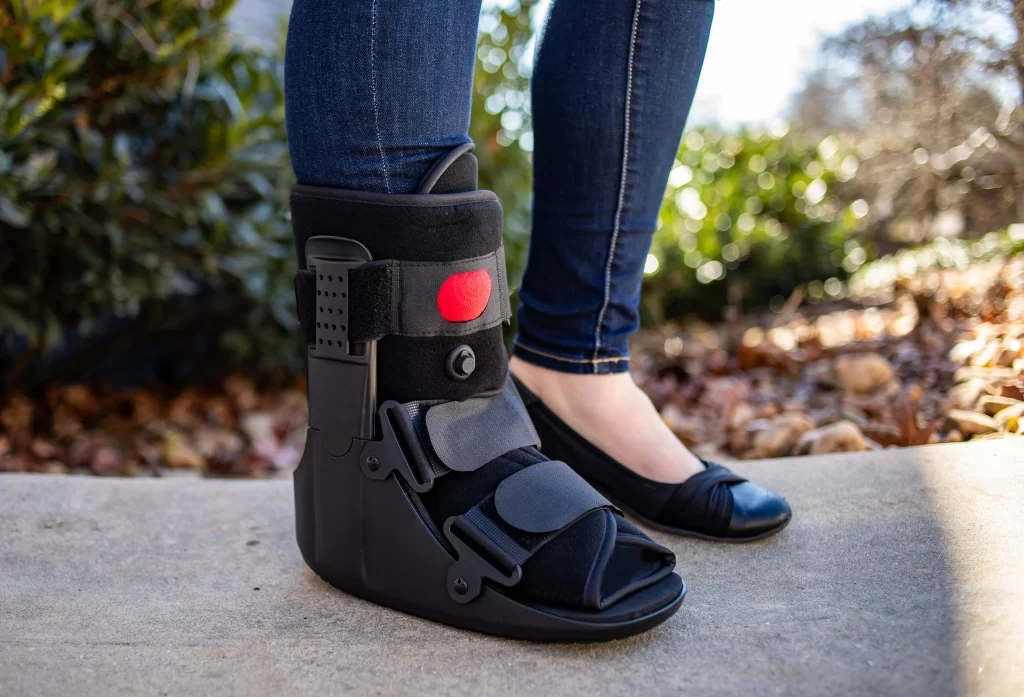
Moon Boot FAQs
👟 Moon Boot FAQs (CAM Walker)
At After Hours Physio, we provide evidence-based rehabilitation for patients prescribed CAM walkers (moon boots) following foot, ankle, or lower leg injuries. These Moon Boot FAQs address common clinical concerns around mobility, weight-bearing, and safe progression through each stage of recovery.
1. Why do I need to wear a moon boot?
Moon boots are used to protect your injury and allow healing without the stress of normal walking forces. They’re often prescribed for:
- Foot and ankle fractures
- Tendon or ligament injuries (e.g. Achilles, peroneal)
- Severe sprains or soft tissue damage
- Post-operative recovery
The boot helps keep your foot stable and reduces strain while allowing some mobility.
2. How long should I wear the moon boot for?
Most patients wear a moon boot for 4 to 6 weeks, but this varies depending on your injury and healing progress. Some injuries require longer immobilisation or a gradual weaning process. Your physiotherapist or specialist will guide this timeline.
3. Can I walk while wearing the moon boot?
If your doctor or physio has allowed weight-bearing, yes — you can walk with the boot on. However, the type of injury and stage of healing determine how much weight you can safely put through your leg. Early walking may be partial, using crutches or a frame to offload pressure.
4. Do I need crutches or a walker as well?
Crutches, a walking stick or a frame are often used with a moon boot to:
- Reduce pressure on your injured leg
- Improve safety and balance
- Prevent limping
Your physiotherapist will assess your walking pattern and provide the best mobility aid for your situation.
5. Should I sleep in the moon boot?
For most patients, you can remove the moon boot at night, especially once swelling has reduced. However, if your injury is unstable or you’re early in the healing process, you may be told to wear it 24/7. Always follow your healthcare provider’s instructions.
6. Can I take the moon boot off during the day?
Yes — for bathing, gentle range-of-motion exercises, or resting with the foot elevated, as long as you’re not bearing weight and your medical team allows it. Be cautious during transfers (e.g. getting in/out of the shower) and always reapply the boot securely.
7. How do I reduce swelling while wearing a moon boot?
Swelling is common and can be managed with:
- Regular elevation (above heart level)
- Gentle ankle pumps and toe movements if allowed
- Compression bandages (under guidance)
- Icing the area when out of the boot
If swelling worsens or causes pain inside the boot, contact your physiotherapist.
8. What should I wear inside the moon boot?
Wear a long, thick sock to prevent rubbing and improve comfort. Avoid bare skin inside the boot — it can lead to blisters or skin irritation.
9. Can I shower with the boot on?
No — moon boots are not waterproof. Remove it and protect your foot with a waterproof cast cover or plastic bag. If you are non-weight-bearing, use a shower chair for safety.
10. How tight should the moon boot be?
The boot should feel snug but not tight. You should be able to slide a finger under the straps. If your foot feels numb, cold or tingly, the boot is too tight. Swelling can change throughout the day, so adjust the straps as needed.
11. Why does my hip or back hurt when I wear the moon boot?
Moon boots can cause leg length imbalance, making your uninjured side feel shorter. This may lead to hip, knee or back pain. Using an “even-up” shoe balancer or shoe lift on the other side can improve alignment. Your physiotherapist can assess your gait and recommend solutions.
12. Do I need physiotherapy while in a moon boot?
Yes — physiotherapy helps with:
- Managing swelling and pain
- Preventing stiffness
- Maintaining strength
- Teaching safe movement and transfers
We also help you wean off the boot safely when the time is right.
At After Hours Physio, we offer home visits across Melbourne, including evenings and weekends, to support your recovery at every stage.
13. How do I transition out of the moon boot?
When advised by your doctor or physio, you’ll follow a weaning plan, which may include:
- Reducing boot use to indoor-only
- Gradually increasing time in supportive shoes
- Starting strength, balance and walking re-training
Skipping this step increases your risk of re-injury.
14. What happens after the boot comes off?
You may notice:
- Muscle weakness
- Stiffness in the ankle or foot
- Reduced balance
A targeted rehabilitation plan will help restore normal walking, build strength, and get you back to daily life or sport.
Need Help Recovering in a Moon Boot?
If you’re using a moon boot and unsure about walking, weaning, or rehab — After Hours Physio can help.
✅ Urgent home visits across Melbourne
✅ Moon boot rehab, walking re-training, strength recovery
✅ 7 days a week, including evenings and weekends
📞 Call us now or book online at www.afterhoursphysio.com.au
About the Author
Dominic Tan, APAM
Principal Physiotherapist & Founder – After Hours Physio
Dominic is an experienced Australian physiotherapist with a special interest in urgent pain management and home-based rehabilitation. He leads After Hours Physio, a home-visiting physiotherapy service in Melbourne, helping patients regain comfort and mobility outside standard clinic hours. Dominic is passionate about delivering evidence-based care where and when it’s needed most.
📞 Urgent home visits available 7 days a week
🌐 www.afterhoursphysio.com.au